Selecting the Right Smokehouse for Your Operation
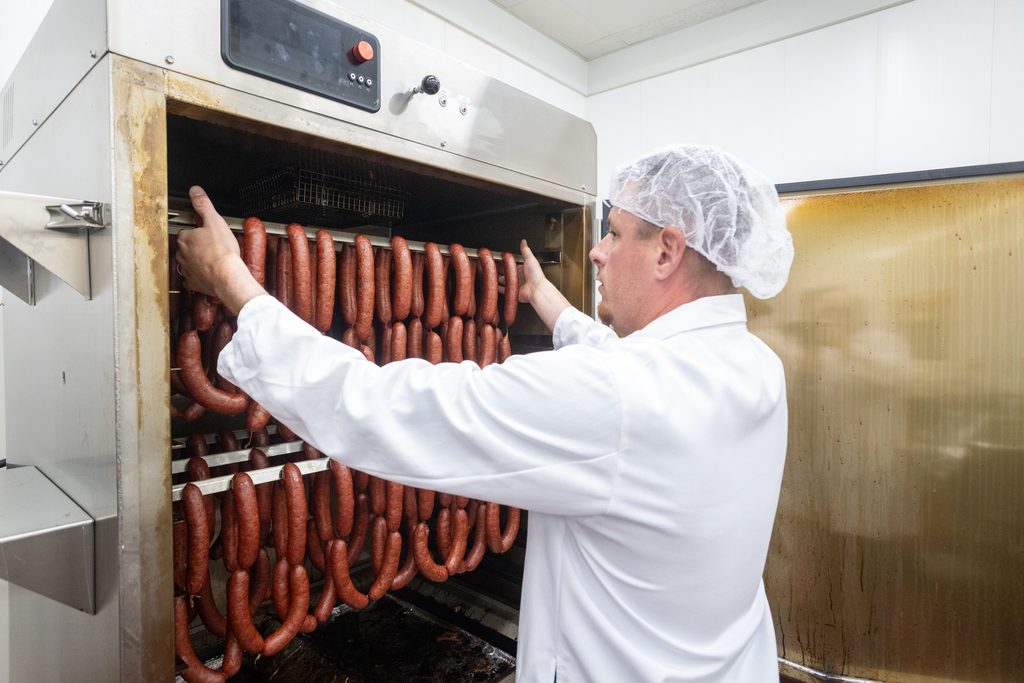
When it comes to thermal processing, smokehouse options range from compact handload units for small processors, caterers and foodservice operations, to multi-truck systems engineered for large-scale commercial production. Choosing the right system starts with an understanding of how the unit will be used in day-to-day operations. Capacity, product mix, budget and features should all be defined before comparing models.
Current and Expected Capacity
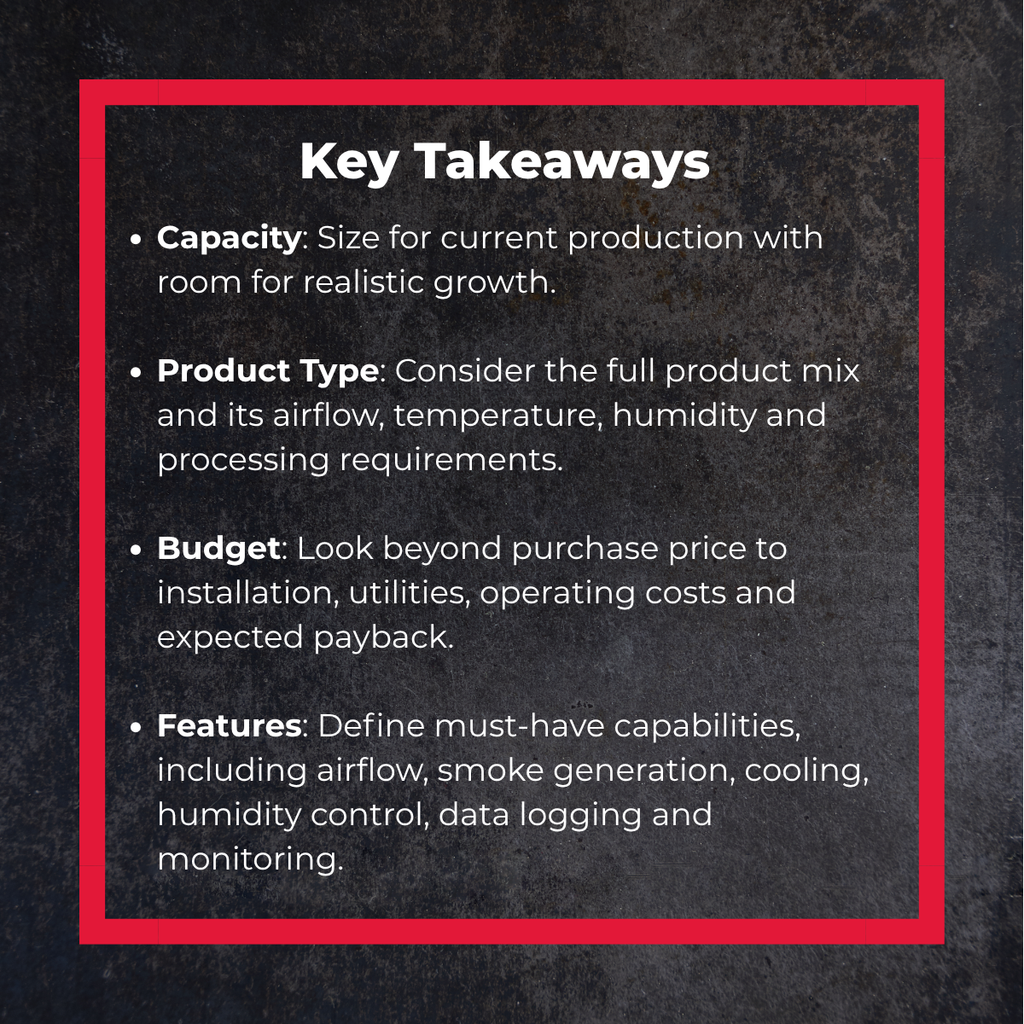
Capacity is about more than physical size. Processors should consider both production volume and frequency. An operation running three days a week has different needs than one running six. The goal is to comfortably cover current output while considering where production may be three to five years from now. Too little capacity can create bottlenecks, while too much can tie up capital and extend the payback period.
Facility fit is just as important. Floor space, door dimensions, utility requirements and clearance for moving product and equipment can all determine which system will work in a plant.
Type of Product Being Made
Consider whether the smokehouse will run a single product or a varied mix. Different products will require different processing times, temperatures, humidity levels, cooling methods and airflow. For example, jerky, fish and brisket have different processing and airflow needs than sausage, bacon and ham.
For operations running multiple products, changeover and sanitation should also factor into the decision. Cleaning accessibility and time between batches can directly affect food safety and production efficiency.
Budget
A smokehouse is a long-term investment, and purchase price tells only part of the story. Total cost of ownership should include installation and facility modifications, utilities, fuel or smoke-generation costs, service and replacement parts, employee training and ongoing maintenance. Factoring in these costs upfront provides a more accurate comparison between systems and a clearer picture of expected payback.
Additional Features
Beyond capacity, product fit and budget, several features will have the greatest impact on day-to-day operation:
Service and parts availability: Reliable support and parts access can help minimize costly downtime.
Airflow type: Vertical vs. horizontal airflow can influence how air moves around the product and consistency across the load.
Smoke generation method: Pellet, wood chip, sawdust and liquid smoke systems vary in flavor, maintenance and labor requirements.
Cooling or refrigeration integration: Integrated cooling can reduce product handling and movement between separate cooking and chilling equipment.
Steam or humidity injection: Humidity control can affect smoke and color development, yield and finished-product characteristics.
Data logging and remote monitoring: Automated records and monitoring can support process documentation, HACCP programs and operational oversight
Not every operation needs every available feature. The right smokehouse should fit the products and processes being used today while providing flexibility for future growth. Defining those requirements upfront can help processors avoid unnecessary costs, retrofits or premature equipment replacement.

Jeff Warren
Technical Sales Account Manager
Pro Smoker