Developing and Training Employees for Retention: A Solid Approach & Metrics That Matter
After years of stressing over who to hire, how to hire, and how to train people well, we learned the hard way that a solid onboarding system is not optional, it is essential. Since we began intentional onboarding and training, new hires are gaining skills and confidence far faster than ever before. Many tasks once taught after a year are now covered within the first 90 days.
Small processors face real challenges with fast‑paced and stressful work, limited HR support, poorly or even no written standards, and plenty of miscommunication. We developed a repeatable system for hiring and onboarding to addresses those gaps with three steps:
- Trial Day. Before making an offer, the applicant is invited to see “a day in the life” at our plant with intentional one on one training from a seasoned employee.
- Why? This helps the both our team and the applicant determine if the position is a good fit. The one-on-one training with an experienced team member is great for both the new hire to learn and our experienced team member to finesse their teaching skills.
- Workplace AND food safety training. There are no shortcuts here for new hires to complete thorough and comprehensive safety training. This must be done, and must be done right.
- Why? Thorough workplace and food‑safety training is non‑negotiable: it ensures legal and regulatory compliance, protects employee and consumer health, and prevents costly recalls or shutdowns. It also creates a baseline of safe, consistent practices that new hires can build on, reducing risk and improving long‑term performance.
- Job specific training. Using a goal oriented checklist we created in-house, new hires are able to clearly understand the expected learning tasks to be accomplished over the first 90 days. The checklist focuses on company culture (brand) and skill-based work. Trainers review the checklist periodically and keep in constant communication with recent hires about their performance.
- Why? This documentation helps the team determine if a new hire is progressing well or if we need to reassess the new member’s position during this probationary period.
Here is an example of a 90-day training program for a meat cutter/butcher:
- 30-day goal: “safe and useful” (proper knife handling, food safety, and clean up; show hustle and coachability)
- 60-day goal: “individual contributor” (start to balance speed with accuracy, understand the flow of the business, and recognize problems)
- 90-day goal: “trusted, efficient teammate” (can self-correct and take pride in their work; full working knowledge of role)
When employees complete onboarding, we see higher retention, stronger productivity, and a healthier workplace culture. This approach also gives us clear data to identify poor fits early, saving time, money, and emotional strain when separations are necessary.
Investing in ongoing onboarding and training builds a reliable, skilled workforce that drives business growth and stability, ultimately improving profitability. Making training part of your company culture, not a one‑time event, ensures employees are prepared, trusted, and able to keep the shop running smoothly even when you’re not there.
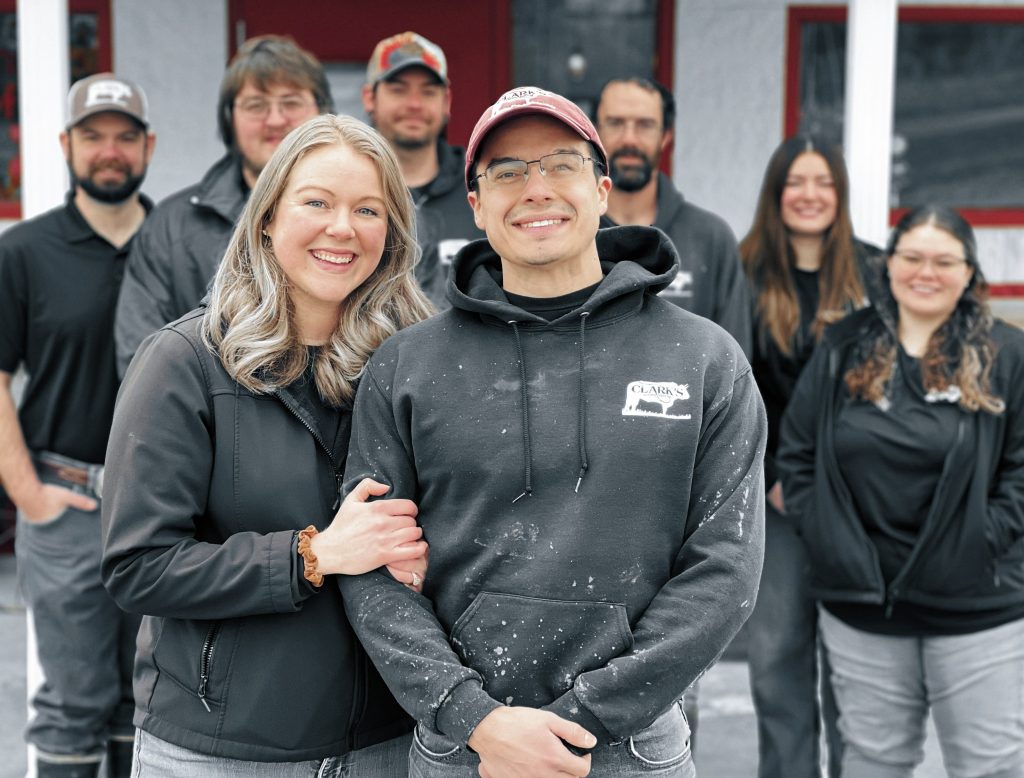
Max & Danielle Carrillo
Owners
Clark’s Custom Meat Co.
8411 SW US HWY 59
St. Joseph, MO 64504
816-364-3728